

How strong are your e-commerce ops? Take the 2-min scorecard.
Score Your OpsOperations maturity determines profit margins. Two sellers with identical products, identical channels, and identical marketing budgets will generate different profits based on how well their operations run. The seller with documented processes, automated compliance checks, and daily health monitoring keeps more of every dollar earned. The seller running on tribal knowledge and WhatsApp coordination leaks profit through errors, penalties, and inefficiency.
But "improve your operations" is not actionable advice. You need to know where you stand today and what specific changes move you to the next level. That is what a maturity model provides — a framework with defined levels, clear characteristics, and concrete steps between each one.
This maturity model is built for ecommerce teams selling on Shopify, Shopee, Lazada, and TikTok Shop. It covers five levels from reactive chaos to predictive automation, with specific operational indicators at each level so you can honestly assess where your business sits and what it takes to advance.
What Is an Ecommerce Operations Maturity Model?
An ecommerce operations maturity model is a five-level framework that describes how operations evolve from ad-hoc manual processes to systematic, automated, and continuously improving operational systems.
Maturity models originated in software engineering (CMMI from Carnegie Mellon) and manufacturing (lean maturity). The concept translates directly to ecommerce operations: as a business grows, its operations need to evolve from informal to structured, from reactive to proactive, and from manual to automated.
Each level in the model describes:
- How work gets done — manually, with checklists, automated, or predicted
- How problems are found — by customers, by the team, by monitoring systems, or prevented entirely
- How knowledge is stored — in people's heads, in documents, in systems, or in intelligent workflows
- How performance is measured — not at all, by lagging indicators, by leading indicators, or by predictive signals
The goal is not to reach Level 5 as fast as possible. The goal is to identify your current level accurately and invest in the right changes to reach the next one. Skipping levels creates fragile operations that look mature on paper but collapse under pressure.
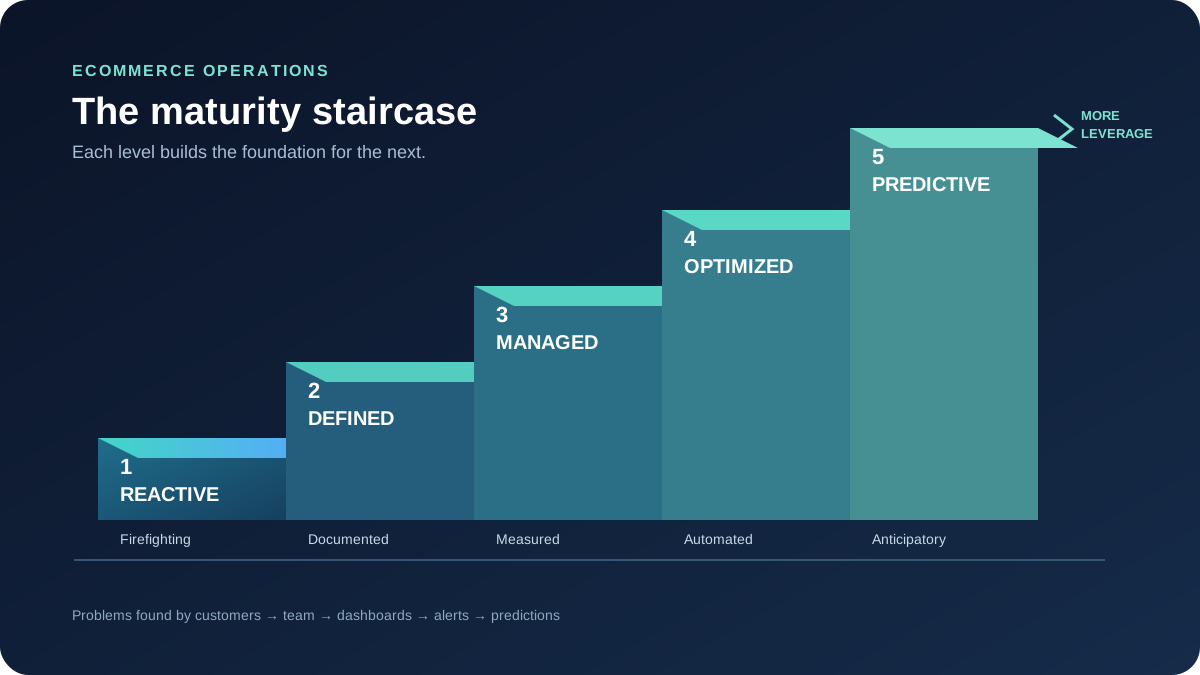
What Are the Five Maturity Levels?
The five levels are Reactive (firefighting), Defined (documented), Managed (measured), Optimized (automated), and Predictive (anticipatory) — each building on the foundation of the previous level.
Here is the complete model:
| Level | Name | Core Characteristic | How Problems Are Found | Typical Team Size |
|---|---|---|---|---|
| 1 | Reactive | Ad-hoc, heroic effort | Customers complain | 1-2 people |
| 2 | Defined | Processes documented | Team notices during work | 2-4 people |
| 3 | Managed | Metrics tracked, checklists enforced | Monitoring dashboards | 3-6 people |
| 4 | Optimized | Automated audits and workflows | Automated alerts | 4-8 people |
| 5 | Predictive | AI-assisted, anticipatory | Predicted before occurrence | 5-10+ people |
Most ecommerce businesses sit between Level 1 and Level 2. Some have reached Level 3. Very few have reached Level 4. Level 5 is emerging and not yet widespread.
The rest of this guide details each level with specific operational indicators, so you can assess where you are with precision rather than optimism.
Level 1: Reactive — What Does It Look Like?
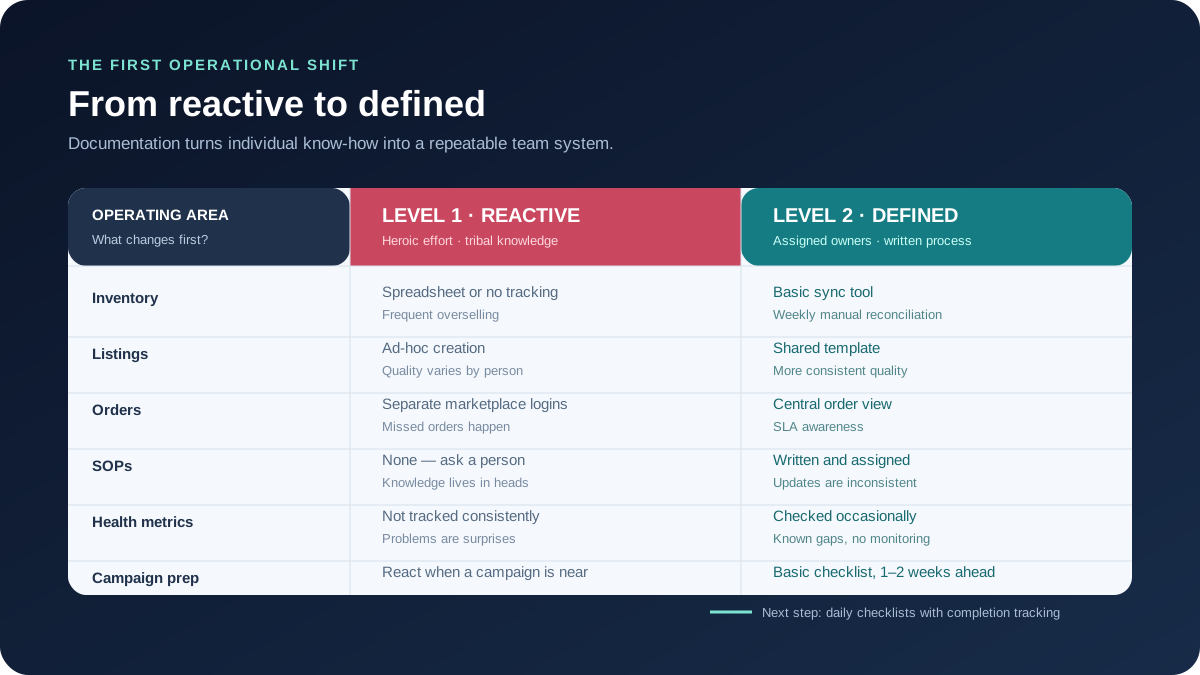
Level 1 operations run on individual effort, tribal knowledge, and WhatsApp coordination — problems are discovered when customers complain or marketplaces issue penalties.
How work gets done: One or two people handle everything. Orders are processed by logging into each marketplace dashboard separately. Inventory is tracked in a spreadsheet — or not at all. Listings are created when someone has time. There is no defined sequence of daily tasks.
How problems are found: A customer messages about a wrong product. A marketplace sends a penalty notification. The team discovers stockouts when a buyer complains. Problems are always discovered after they have already affected a customer.
How knowledge is stored: In people's heads. When the person who "knows how Shopee works" is on leave, things break. There are no written procedures. Training happens through shadowing and asking questions in the group chat.
How performance is measured: Revenue. That is the only metric tracked with any consistency. Operational metrics — compliance rate, fulfillment speed, inventory accuracy — are not measured at all.
Operational indicators of Level 1:
| Area | Level 1 Indicator |
|---|---|
| Inventory | Spreadsheet or no tracking. Manual count. Frequent overselling. |
| Listings | Created ad-hoc. No standard template. Different quality per person. |
| Orders | Processed on each marketplace separately. Occasional missed orders. |
| SOPs | None. "Ask [person's name]" is the onboarding process. |
| Compliance | Unknown. Penalties are a surprise. |
| Health metrics | Not tracked. Seller score checked only when something goes wrong. |
| Daily tasks | No defined routine. Tasks depend on who remembers what. |
| Campaign prep | Reactive. "11.11 is next week, we should prepare." |
The cost of Level 1: Small errors compound. A 1% daily error rate on a catalog of 500 SKUs means 5 product issues per day, 35 per week, 150 per month. Each error costs time, customer trust, and potentially marketplace standing. At this rate, the team spends most of its time fixing problems instead of growing the business.
How to move from Level 1 to Level 2: Document your five highest-frequency tasks as SOPs. This single action — writing down how the work should be done — transitions you from tribal knowledge to defined processes. See the ecommerce SOP guide for the writing framework.
Level 2: Defined — What Does It Look Like?
Level 2 operations have documented processes and assigned responsibilities — the team knows what should happen and who should do it, but compliance is inconsistent and monitoring is manual.
How work gets done: SOPs exist for core tasks. Team members have assigned responsibilities. There is a rough daily routine. But following the SOP is optional — there is no enforcement mechanism, and during busy periods, shortcuts happen.
How problems are found: The team catches issues during normal work — a listing that looks wrong, an inventory discrepancy noticed during a manual check. Problems are found faster than Level 1 but still after they occur.
How knowledge is stored: In documents. Google Docs, Notion pages, or internal wikis contain the procedures. New hires read the documents instead of relying entirely on shadowing. But documents go stale, and the team does not always check them.
How performance is measured: Basic metrics are tracked — orders per day, revenue per channel, maybe response rate. Operational health metrics (compliance rate, inventory accuracy) are checked occasionally, not systematically.
Operational indicators of Level 2:
| Area | Level 2 Indicator |
|---|---|
| Inventory | Basic sync tool in place. Manual reconciliation weekly. Occasional overselling. |
| Listings | Template exists. Quality is better but still varies. |
| Orders | Central order view. SLA awareness but no systematic tracking. |
| SOPs | Written but not always followed. Updated inconsistently. |
| Compliance | Spot-checked manually. Some rules known, many gaps. |
| Health metrics | Checked occasionally. No systematic monitoring. |
| Daily tasks | Informal routine. Most tasks happen, some get skipped. |
| Campaign prep | Basic checklist. Preparation starts 1-2 weeks before. |
The cost of Level 2: Inconsistency. Good days and bad days. When the team is focused, operations run well. When workload spikes, the process shortcuts surface as errors. The documented processes exist but are not embedded in daily workflow — they are reference documents, not operational tools.
How to move from Level 2 to Level 3: Implement daily checklists with completion tracking. This transforms documented processes from "read when you remember" to "complete and prove it every day." Add a weekly metric review — 30 minutes reviewing operational KPIs across channels.
For the specific daily tasks that should be on your checklist, see the ecommerce daily operations checklist.
Level 3: Managed — What Does It Look Like?
Level 3 operations are measured, tracked, and managed with dashboards, daily checklists, and weekly metric reviews — the team knows what good looks like and can see when performance drifts.
How work gets done: Daily checklists define the work. Each task has an owner, a deadline, and an expected completion standard. The team follows a consistent daily routine. When someone is absent, another team member can follow the checklist and maintain continuity.
How problems are found: Dashboards and metric tracking surface issues before they escalate. A declining compliance rate is visible before it causes listing suppression. A seller health metric trending downward triggers investigation before it hits the penalty threshold.
How knowledge is stored: In structured systems — versioned SOPs linked to checklist tasks, training materials organized by function, and metric history that shows trends over time.
How performance is measured: Operational KPIs are tracked weekly: compliance rate, inventory accuracy, fulfillment SLA adherence, checklist completion rate, seller health metrics. Performance targets are set and progress is visible.
Operational indicators of Level 3:
| Area | Level 3 Indicator |
|---|---|
| Inventory | Real-time sync. Weekly accuracy checks with documented results. Under 1% error rate. |
| Listings | Standardized across channels. Quality checked on creation. Manual compliance review monthly. |
| Orders | Central system with SLA tracking. Late shipment rate under 2%. |
| SOPs | Versioned, linked to tasks. Quarterly review cycle. |
| Compliance | Monthly manual audits. Known rules documented. Most violations caught before penalties. |
| Health metrics | Weekly dashboard review. Targets set. Trends tracked. |
| Daily tasks | Checklists with completion tracking. Completion rate over 85%. |
| Campaign prep | Structured preparation starting 4 weeks before. Readiness checklist used. |
The cost of Level 3: Management overhead. Tracking metrics, reviewing checklists, maintaining SOPs, and running audits takes time. For small teams, this overhead may feel heavy relative to the team size. The investment pays off in consistency and error reduction — but it requires discipline to maintain.
How to move from Level 3 to Level 4: Automate the monitoring and auditing that currently requires manual effort. Replace the monthly manual compliance audit with automated daily scans. Replace manual health score checks with automated alerts. The ecommerce operations KPIs guide covers which metrics to automate first.
How strong are your ecommerce operations? Score your ops in 2 minutes — Take the free scorecard. No signup required.
Level 4: Optimized — What Does It Look Like?
Level 4 operations use automated audits, smart checklists, and system-generated alerts to maintain operational quality with minimal manual oversight — the team focuses on exceptions and improvements, not routine checks.
How work gets done: Routine operational tasks are either automated or structured into checklists that generate automatically based on conditions. The team spends 70% of its time on execution and 30% on improvement — the inverse of Level 1 where 70% goes to firefighting.
How problems are found: Automated monitoring systems detect issues in real-time. Listing compliance violations trigger alerts immediately. Inventory sync discrepancies generate notifications. Seller health metrics below threshold fire warnings. The team investigates alerts instead of searching for problems.
How knowledge is stored: In intelligent systems. SOPs are embedded in workflows — the checklist task surfaces the relevant SOP automatically. Historical data is used to improve processes. The system learns which tasks get flagged most often and highlights training gaps.
How performance is measured: Automated dashboards with real-time data. Leading indicators (not just lagging). The team knows current operational health at any moment, not just at the weekly review.
Operational indicators of Level 4:
| Area | Level 4 Indicator |
|---|---|
| Inventory | Automated sync with monitoring. Alerts on discrepancies. Under 0.5% error rate. |
| Listings | Automated compliance audits running daily. Violations flagged automatically. |
| Orders | Automated SLA tracking with escalation. Late shipment rate under 0.5%. |
| SOPs | Embedded in checklists. Auto-prompted during task execution. |
| Compliance | Automated daily audits across all channels. Violations resolved within 24 hours. |
| Health metrics | Real-time dashboard. Automated alerts on threshold crossings. |
| Daily tasks | Auto-generated checklists with evidence requirements. Completion rate over 95%. |
| Campaign prep | Automated readiness tracking. System verifies stock, listings, and promotions. |
What makes Level 4 different from Level 3: The shift from manual monitoring to automated monitoring. At Level 3, a person reviews the compliance dashboard weekly. At Level 4, the system scans continuously and alerts the person only when something needs attention. This frees the team to focus on strategic improvements instead of routine oversight.
The cost of Level 4: Tool investment. As Gartner's digital commerce research notes, automated monitoring, smart checklists, and real-time dashboards require operational platforms that are more expensive than basic listing tools. The ROI comes from error reduction, penalty avoidance, and team productivity — but the upfront cost is higher.
How to move from Level 4 to Level 5: Add predictive capabilities. Use historical data to forecast problems — predict which products will run out during campaigns, which listings are trending toward non-compliance, which seller metrics are likely to cross penalty thresholds based on current trajectory.
Level 5: Predictive — What Does It Look Like?
Level 5 operations anticipate problems before they occur using historical data, pattern recognition, and AI-assisted analysis — the team acts on predictions, not just alerts.
How work gets done: The system suggests priorities based on predicted impact. AI-generated daily briefings highlight what needs attention today based on trends, campaign calendars, and historical patterns. The team validates and acts on predictions rather than discovering issues reactively.
How problems are found: Predicted before they occur. The system flags "Inventory for SKU-1234 will run out in 3 days based on current velocity" before stockout happens. "Listing quality score for 12 products is declining — review before next audit cycle" before suppressions hit.
How knowledge is stored: In continuously improving systems. Every operational event feeds back into the predictive model. The system gets better at anticipating problems over time based on the team's own data.
How performance is measured: Predictive accuracy alongside traditional metrics. What percentage of predicted issues were real? How many problems were prevented versus reacted to?
Operational indicators of Level 5:
| Area | Level 5 Indicator |
|---|---|
| Inventory | Predictive replenishment. Campaign-adjusted forecasting. Near-zero stockouts. |
| Listings | Predictive compliance monitoring. Issues fixed before they trigger penalties. |
| Orders | Predictive fulfillment planning. Capacity adjusted before bottlenecks. |
| SOPs | Continuously updated based on data. AI suggests improvements. |
| Compliance | Predictive risk scoring per listing. Proactive optimization. |
| Health metrics | Trend forecasting with predicted intervention points. |
| Daily tasks | AI-prioritized task lists based on predicted impact. |
| Campaign prep | Automated preparation triggered weeks before campaign based on historical patterns. |
The reality of Level 5: Very few ecommerce operations are here in 2026. The technology exists — AI, predictive analytics, machine learning — but the operational data foundation required to make it work (clean data, consistent tracking, historical depth) takes years to build. Level 5 is the direction, not the destination for most teams today.
How Do You Assess Your Current Maturity Level?
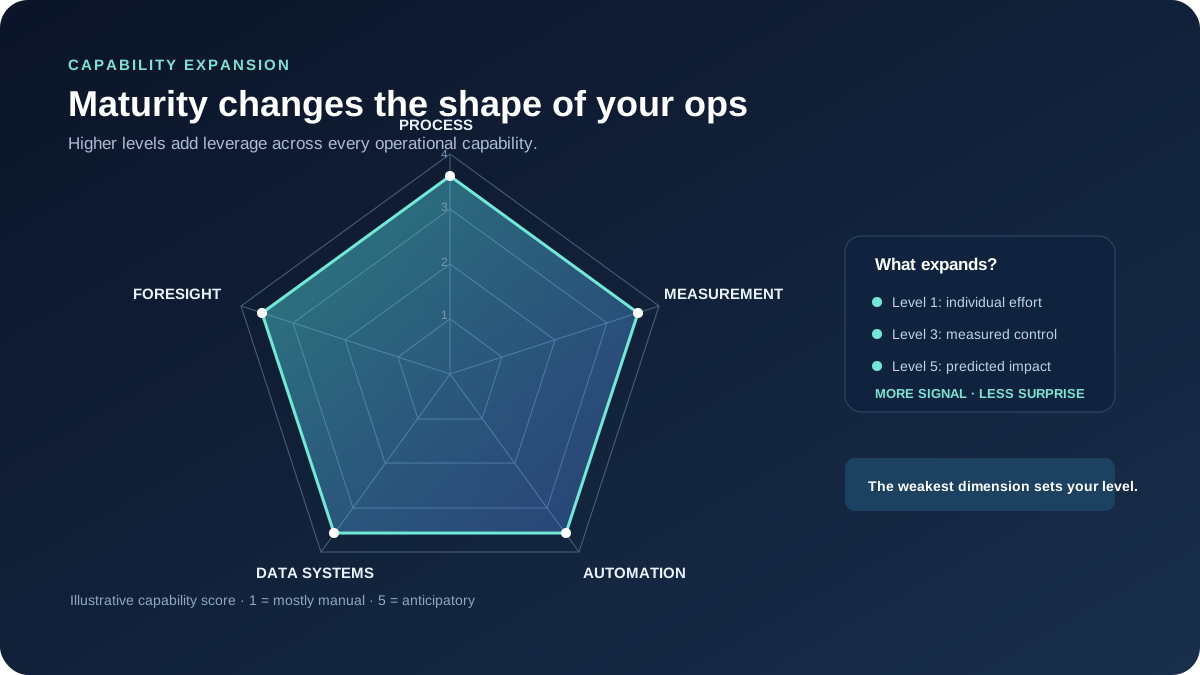
Score yourself across eight operational dimensions — inventory, listings, orders, SOPs, compliance, health monitoring, daily tasks, and campaign readiness — and your overall level is determined by your lowest-scoring dimensions.
Use this self-assessment. For each dimension, identify which level description best matches your current reality. Be honest — optimistic self-assessment leads to wrong investment decisions.
| Dimension | Your Level (1-5) | Assessment Question |
|---|---|---|
| Inventory | ___ | How often do we oversell? How do we track accuracy? |
| Listings | ___ | How do we ensure listing quality? When do we catch errors? |
| Orders | ___ | How often do we miss SLAs? How do we track fulfillment? |
| SOPs | ___ | Do documented procedures exist? Are they followed? Enforced? |
| Compliance | ___ | How do we check marketplace compliance? How often? |
| Health monitoring | ___ | How do we track seller health? When do we discover problems? |
| Daily tasks | ___ | Is there a structured daily routine? Is completion tracked? |
| Campaign readiness | ___ | How far in advance do we prepare? Is preparation systematic? |
Your overall maturity level is your lowest dimension. Operations is a system — the weakest link determines the system's reliability. If your inventory is at Level 4 but your SOPs are at Level 1, your operations are effectively at Level 1 because undocumented processes will eventually cause inventory errors.
Common maturity profiles:
- The "good-enough" seller: Most dimensions at Level 2, inventory at Level 3 (because they invested in sync tools). Operationally stable but fragile under load.
- The scaling seller: Most dimensions at Level 2-3, campaign readiness at Level 1. Handles daily operations but scrambles during peak periods.
- The systematic seller: Most dimensions at Level 3, moving to Level 4 in compliance and monitoring. Consistent daily operations, investing in automation.
What Does It Take to Advance One Level?
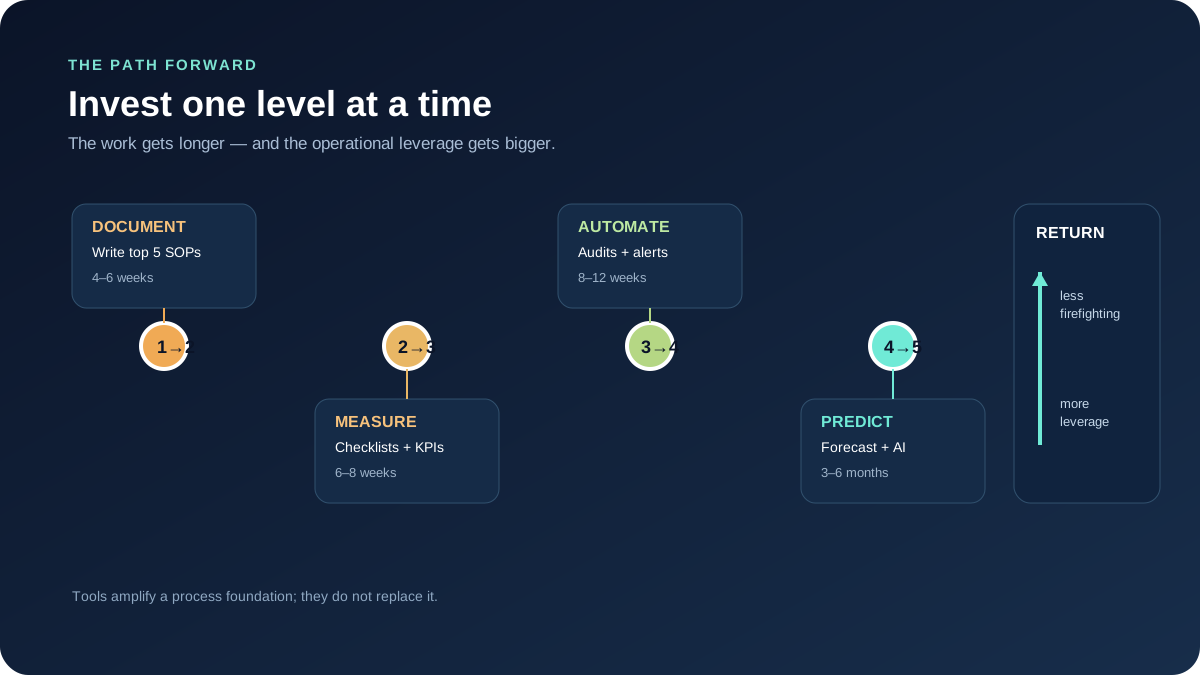
Each level transition requires specific investments — advancing from Level 1 to 2 requires documentation, Level 2 to 3 requires measurement, Level 3 to 4 requires automation, and Level 4 to 5 requires predictive intelligence.
| Transition | Primary Investment | Time Required | Key Deliverable |
|---|---|---|---|
| Level 1 to 2 | Write SOPs for top 5 processes | 4-6 weeks | Documented procedures with assigned owners |
| Level 2 to 3 | Implement checklists and metric tracking | 6-8 weeks | Daily checklists, weekly KPI review, health dashboard |
| Level 3 to 4 | Deploy automated audits and monitoring | 8-12 weeks | Automated compliance scans, alert system, real-time dashboard |
| Level 4 to 5 | Add predictive analytics and AI | 3-6 months | Predictive inventory, trend forecasting, AI-assisted prioritization |
The common mistake: Trying to jump from Level 1 to Level 4 by buying tools. Tools without processes are expensive dashboards nobody uses. You need the process foundation (Levels 2-3) before automation (Level 4) delivers value. A $500/month operations platform does nothing if your team does not have defined daily routines to automate.
The other common mistake: Staying at Level 2 too long. Many teams document processes and stop there. Without measurement (Level 3), they have no way to know whether the processes are working or being followed. Documentation without measurement is hope, not management.
How Does Maturity Affect Revenue and Profitability?
Higher operational maturity correlates with lower error rates, fewer penalties, faster fulfillment, and higher seller health scores — all of which directly improve revenue and protect margins.
| Maturity Level | Typical Error Rate | Penalty Frequency | Seller Health Impact |
|---|---|---|---|
| Level 1 | 3-5% of orders | Monthly | Frequent warnings, occasional suspension risk |
| Level 2 | 1-3% of orders | Quarterly | Stable but not competitive |
| Level 3 | 0.5-1% of orders | Rare | Consistently good |
| Level 4 | Under 0.5% | Very rare | Preferred/premium seller status |
| Level 5 | Under 0.1% | Almost never | Top-tier across all channels |
The margin math: Each 1% reduction in error rate across 1,000 monthly orders eliminates 10 problem orders per month. Each problem order costs an estimated $5-20 in handling time, potential penalty, and lost customer lifetime value. Reducing errors from 3% to 0.5% saves $125-500 per month in direct costs — plus the compounding benefit of better seller health scores, which improve search visibility, which increases organic sales.
For teams looking to quantify their operational performance against benchmarks, the ecommerce operations metrics guide provides the specific numbers to track.
Frequently Asked Questions
How long does it take to move up one maturity level?
Plan for 4-12 weeks per level transition. Level 1 to 2 is the fastest (it requires documentation, not tools). Level 3 to 4 takes longer because it requires tool implementation and workflow changes. The transitions also depend on team size — a solo operator moves faster through early levels because there is no change management overhead.
Can a small team reach Level 4?
Yes, but it requires the right tools. A 2-3 person team can operate at Level 4 with an operations platform that automates monitoring and alerting. The team focuses on responding to alerts and exceptions rather than running manual checks. Without tools, Level 4 requires more headcount to handle the monitoring workload.
What is the most common maturity level for ecommerce sellers?
Level 1 to 2. The majority of ecommerce sellers — especially those with under $500K annual revenue — operate with minimal documentation and manual processes. This is normal for early-stage businesses but becomes a growth constraint as complexity increases.
Is Level 5 realistic for mid-size ecommerce businesses?
Not in 2026, for most. Level 5 requires clean historical data, predictive tooling, and AI integration that are still emerging. The practical target for mid-size businesses in the next 12 months is Level 3-4. Level 5 will become more accessible as operations platforms incorporate AI capabilities.
Does this model apply to marketplace-only sellers?
Yes. Marketplace sellers (no own store, only Shopee/Lazada/TikTok Shop) follow the same maturity progression. The specific tasks differ — marketplace sellers do not manage checkout flows or site speed — but the operational dimensions (inventory, listings, compliance, daily tasks) apply equally.
Keep Reading
- What Is Ecommerce Operations? — The complete guide to understanding ecommerce ops
- Building an Ecommerce Operations Playbook — How to build your operational system
- Ecommerce Operations KPIs — The metrics that measure operational maturity
- State of Ecommerce Operations 2026 — Industry trends shaping operations
Take the Next Step
Knowing your maturity level is step one. Knowing what to do about it is step two. Take the Ecommerce Operations Scorecard — it takes 2 minutes and places you on the maturity curve with specific recommendations for what to fix first. No signup required.
Find out what your operation is missing
Answer 10 questions. Get your ops score. Takes 2 minutes.
Take the Scorecard