

How strong are your e-commerce ops? Take the 2-min scorecard.
Score Your OpsMorning routines separate reactive teams from resilient ones. Ecommerce operations managers who run a structured daily checklist resolve 73% of issues before they reach the customer, according to a 2025 Shopify Plus operational benchmarking study. The remaining teams spend their afternoons fighting fires that a 30-minute morning review would have caught.
This ecommerce daily operations checklist covers the exact sequence of checks — order status, stock levels, seller health, marketplace alerts, and team task assignment — that keeps a multi-channel operation stable. Whether you sell on Shopify, Shopee, Lazada, or TikTok Shop, the routine is the same. Only the seller centers change.
What Is an Ecommerce Daily Operations Checklist?
An ecommerce daily operations checklist is a structured sequence of morning checks that an operations manager completes to verify order health, stock levels, seller metrics, and team readiness across all active sales channels. Teams using daily operational checklists report 40% fewer escalations to management, per Linnworks' 2025 multi-channel seller survey.
A daily operations checklist is not a project plan or a strategy document. It is a repeatable verification routine — the operational equivalent of a pilot's pre-flight check. You run the same steps every morning, in the same order, and flag anything that deviates from normal.
The concept fits within the broader discipline of ecommerce operations, which covers how teams manage the day-to-day execution of selling across multiple channels. The daily checklist is the smallest, most frequent unit of that discipline.
Most teams already perform some version of these checks informally — opening Seller Center, glancing at order counts, scanning for messages. The difference between informal scanning and a structured checklist is coverage. Informal checks miss things. Structured checklists do not.

Why Do Most Ecommerce Teams Discover Problems Too Late?
Most ecommerce teams operate reactively because they lack a single view of cross-channel health. A 2025 BigCommerce survey found that 62% of multi-channel sellers learn about stockouts from customer complaints rather than internal monitoring. A daily checklist forces proactive detection.
The root cause is fragmented visibility. An operations manager selling on Shopee Malaysia, Lazada Philippines, and a Shopify storefront has three separate dashboards, three notification systems, and three sets of metrics. Without a unified routine, the manager checks whichever channel feels most urgent — and ignores the others until something breaks.
Three patterns cause most preventable issues:
- Overnight order failures — Payment declines, address validation errors, and inventory conflicts that accumulate between 10 PM and 8 AM.
- Inventory desynchronization — A sale on one channel that does not decrement stock on another, leading to overselling.
- Seller health decay — Metrics like late shipment rate or response time creeping past thresholds without anyone noticing until the account gets a penalty.
A daily checklist addresses all three by assigning a specific check, in a specific order, at a specific time.
How Should You Structure the First 30 Minutes?
Structure your first 30 minutes into five sequential blocks: order review (5 min), stock check (5 min), seller health scan (5 min), alert triage (5 min), and team task assignment (10 min). Research from Deloitte's 2024 retail operations report shows that time-boxed operational routines cut average issue resolution time by 28%.
The sequence matters. You review orders first because they have the tightest SLA. Stock comes second because inventory problems affect every subsequent order. Seller health is third because metric decay is slower but more punishing. Alerts capture anything the first three blocks missed. Team assignment is last because it depends on what the earlier blocks uncovered.
| Block | Duration | What You Check | Tools / Sources |
|---|---|---|---|
| 1. Order Review | 5 min | Pending orders, failed payments, cancellation requests, returns filed overnight | Shopify Admin, Shopee Seller Center, Lazada Seller Center |
| 2. Stock Check | 5 min | Low-stock SKUs, out-of-stock listings, inventory sync mismatches across channels | Inventory management system, channel dashboards |
| 3. Seller Health Scan | 5 min | Late shipment rate, cancellation rate, response time, penalty points | Marketplace seller health dashboards |
| 4. Alert Triage | 5 min | Platform notifications, compliance warnings, pricing anomalies, content drift flags | Marketplace notification center, monitoring tools |
| 5. Team Task Assignment | 10 min | Assign resolution tasks, set priorities, confirm yesterday's completions, review SOP compliance | Task management system, team chat |
This 30-minute block becomes your team's "Morning Coffee" — a term TaskForce uses for its aggregated daily operations dashboard that combines all five blocks into a single health score.

What Should the Order Review Block Cover?
The order review block should verify all pending orders from the last 12 hours, flag any failed payments or address errors, and confirm that auto-fulfillment queues are processing correctly. Shopee and Lazada penalize sellers with late shipments after 48 hours — missing this check by one morning can trigger penalty points.
Start with total pending orders across all channels. Compare against your trailing 7-day average. A significant spike means a promotion is working or a bot attack is inflating orders. A significant drop means a listing is broken or a channel is down.
Next, check for failed or flagged orders:
- Payment failures — Orders stuck in "pending payment" beyond the platform's auto-cancel window.
- Address validation errors — Incomplete addresses that will cause shipping failures.
- Cancellation requests — Customer-initiated cancellations that need confirmation within the platform's SLA.
- Return/refund requests — New returns filed overnight that require acknowledgment within 24 hours on most SEA marketplaces.
For Shopee Malaysia and Shopee Philippines, check the "To Ship" tab specifically — orders that have been paid but not yet shipped. Lazada Indonesia uses the "Pending" status for the same purpose. TikTok Shop groups these under "Awaiting Shipment."
How Do You Check Stock Levels Efficiently Across Channels?
Check stock by exception, not by SKU. Filter for items below your safety stock threshold, items at zero across any channel, and items where channel quantities have diverged by more than 20%. According to IHL Group's 2025 inventory distortion study, overstocks and stockouts cost retailers $1.77 trillion globally.
Reviewing every SKU every morning is impractical for catalogs above 50 products. Instead, use threshold-based alerts:
Critical (act immediately):
- Any SKU at 0 units on any active channel
- Any SKU where Channel A shows stock but Channel B shows zero (sync failure)
- Any hero SKU below 7-day cover
Warning (act today):
- SKUs below 14-day cover
- SKUs where total inventory across channels differs from warehouse count by more than 10%
- New listings with no inventory allocated
Informational (review weekly):
- Slow-moving inventory over 90 days
- SKUs with excess stock relative to sales velocity
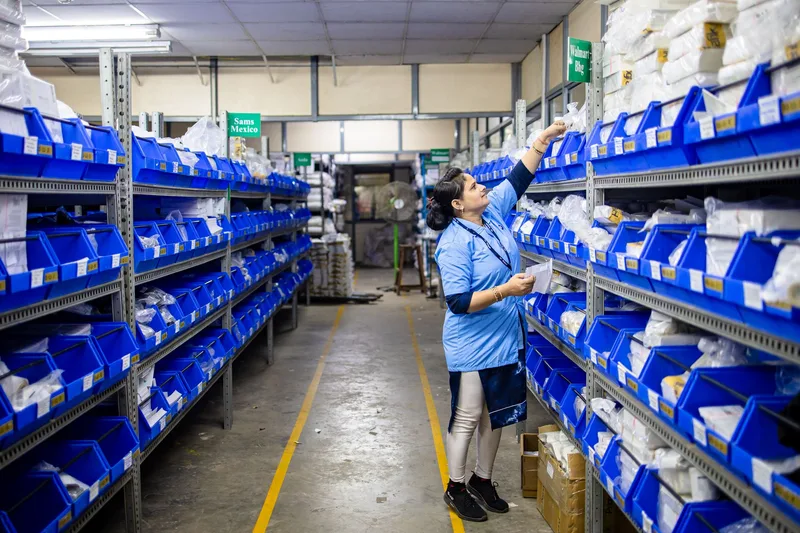
This exception-based approach reduces your stock check from scanning hundreds of SKUs to reviewing 5-15 items that actually need attention. Tools that track marketplace health scores often include stock health as a weighted component, so this check feeds directly into your overall channel health.
What Seller Health Metrics Should You Monitor Daily?
Monitor the four metrics that marketplaces use to penalize or delist sellers: late shipment rate, cancellation rate, response time, and return rate. Shopee's Seller Education Hub states that exceeding any one penalty threshold can reduce search visibility by up to 30% within 48 hours.
Each marketplace weights these differently, but the core four are universal. McKinsey's 2024 retail operations research found that proactive monitoring of leading operational metrics reduces revenue-impacting incidents by 35%:
| Metric | Shopee Threshold | Lazada Threshold | TikTok Shop Threshold | Check Frequency |
|---|---|---|---|---|
| Late Shipment Rate | < 5% | < 3.5% | < 4% | Daily |
| Cancellation Rate | < 2% | < 2% | < 2.5% | Daily |
| Response Time | < 12 hours | < 24 hours | < 24 hours | Daily |
| Return/Refund Rate | < 2% (varies) | < 3% | < 5% | Weekly |
Do not just check whether you are above or below the threshold. Track the trend. A late shipment rate that was 1.2% on Monday, 2.1% on Tuesday, and 3.4% on Wednesday will breach the 5% threshold by Friday. The daily checklist catches the trend on Tuesday — when you still have time to fix the fulfillment bottleneck.
For teams tracking ecommerce operations KPIs at a strategic level, these daily seller health checks provide the leading indicators. The KPIs tell you where you stand. The daily checks tell you where you are heading.
How strong are your ecommerce operations? Score your ops in 2 minutes — Take the free scorecard. No signup required.
How Do You Triage Marketplace Alerts Without Getting Overwhelmed?
Classify every alert into three buckets: revenue-blocking (act now), compliance-risk (act today), and informational (batch weekly). A 2025 ChannelEngine multi-marketplace report found that the average seller receives 23 platform notifications per day — sellers who triage systematically resolve critical issues 4x faster.
The alert triage block is where most teams lose discipline. Marketplace notifications pile up: policy updates, promotion invitations, system maintenance notices, compliance warnings. Without a classification system, managers either read everything (wasting 30+ minutes) or ignore everything (missing critical warnings).
Use this three-bucket system:
Revenue-blocking (act within 1 hour):
- Listing deactivated or suppressed
- Account suspension warning
- Payment hold notification
- Shipping integration failure
Compliance-risk (act within 8 hours):
- Policy violation notice
- Product listing content flagged
- Pricing error detected (especially if below marketplace minimum)
- Intellectual property complaint
Informational (batch weekly):
- Promotion enrollment invitations
- Platform feature updates
- Seller education content
- Performance achievement badges
Assign revenue-blocking items during the team task block. Log compliance-risk items as tasks with today's deadline. Batch informational items for a weekly review session.
How Do You Assign Tasks and Close the Loop With Your Team?
Use the final 10 minutes to convert every finding from the first four blocks into an assigned, time-bound task with an SOP reference. Harvard Business Review's 2024 operational management research found that teams with explicit task ownership resolve issues 52% faster than teams that rely on shared responsibility.
The team task assignment block converts your morning review into action. Without this block, you have a list of observations. With it, you have a list of accountable assignments.
For each issue found in blocks 1-4:
- Create a task with a clear description of the problem and the expected resolution.
- Assign an owner — one person, not a team or channel.
- Set a deadline based on the triage bucket (1 hour, 8 hours, or end of week).
- Link the relevant SOP so the assignee knows the standard procedure for resolution.
- Require evidence of completion — a screenshot, a status change, or an API verification.
This is where the ecommerce checklist concept evolves from a personal review into a team system. The manager runs the checklist; the team executes the tasks it generates.
TaskForce's checklist system automates this loop: each checklist item supports SOP links, evidence fields (photo proof, screenshots), and auto-verification against marketplace APIs — so managers can confirm that a stock replenishment actually happened without manually checking the seller center.

How Do You Build This Routine Into a Lasting Habit?
Anchor the checklist to an existing daily trigger — the first login of the day — and track completion streaks to build consistency. BJ Fogg's behavioral research at Stanford shows that habit formation requires a consistent cue, a minimal routine, and immediate feedback. Completion streaks provide that feedback loop.
A checklist only works if the team actually runs it every day. Three design choices make the routine stick:
1. Same time, same order. Run the checklist within the first 30 minutes of the work day. Never rearrange the block order. The consistency removes decision fatigue.
2. Track streaks, not perfection. A completion streak — "14 consecutive days of completing the morning checklist" — creates positive momentum. Missing one day breaks the streak, which is a stronger motivator than any KPI dashboard.
3. Rotate the lead. In teams of 3 or more, rotate who runs the morning checklist weekly. This prevents single-point-of-failure knowledge and trains the entire team on cross-channel operations.
4. Review and trim monthly. Every 30 days, review the checklist for items that never surface issues. Remove or demote them to weekly checks. Add any new recurring issue patterns. A checklist that grows without pruning becomes a burden.
Frequently Asked Questions
How long should a daily ecommerce operations checklist take?
Thirty minutes is the target for teams managing 2-5 channels with catalogs under 1,000 SKUs. Larger operations (10+ channels, 5,000+ SKUs) may need 45-60 minutes, but the structure remains the same five blocks. If your checklist regularly exceeds 60 minutes, you need better tooling or more aggressive threshold-based filtering.
Can I automate the daily checklist instead of doing it manually?
You can automate data collection — pulling stock levels, seller health metrics, and order counts into a single dashboard. The triage and assignment steps still require human judgment. Tools like TaskForce automate the data aggregation through the Morning Coffee dashboard and flag exceptions, but the operations manager still decides priorities and assigns tasks.
What if my team sells on only one channel — do I still need this?
Yes. Single-channel sellers still face overnight order failures, stock threshold breaches, and seller health metric decay. The checklist is shorter (no cross-channel sync checks), but the five-block structure still applies. You skip the inventory sync comparison and focus on absolute thresholds instead.
Should I run the checklist on weekends and holidays?
If your marketplace listings are live and accepting orders on weekends, yes. Shopee Malaysia, Lazada Indonesia, and TikTok Shop do not pause SLA timers on weekends. A weekend without a checklist means two days of unmonitored operations. Assign a weekend rotation or reduce the checklist to blocks 1 (orders) and 3 (seller health) on non-working days.
How do I know if the daily checklist is actually improving my operations?
Track three trailing metrics over 30 days: number of customer complaints related to operational failures (stockouts, late shipments, wrong items), seller health penalty points received, and average time from issue detection to resolution. All three should decrease within the first month of consistent checklist usage.
Keep Reading
Find out what your operation is missing
Answer 10 questions. Get your ops score. Takes 2 minutes.
Take the Scorecard