

How strong are your e-commerce ops? Take the 2-min scorecard.
Score Your OpsOrders are the heartbeat of any ecommerce operation.
When they flow — captured, processed, fulfilled, and closed — everything holds. When they break, the fallout is immediate: marketplace penalties, damaged seller metrics, customer disputes, and returns that eat margin.
For single-channel stores, order management is manageable. Add a second marketplace. Then a third. Now you have four dashboards, four SLA windows, four penalty systems, and one team trying to hold it together.
This guide covers what order management for ecommerce is, why it breaks at scale, and how to build a system that holds.

What Is Order Management for Ecommerce?
Ecommerce order management is the end-to-end system for receiving, processing, fulfilling, and closing customer orders across all sales channels. It spans the full lifecycle from when a customer places an order to delivery confirmation and post-delivery handling, including returns, cancellations, and exceptions. According to Shopify's 2025 Commerce Trends Report, merchants with fragmented order management processes experience 3.6x more fulfillment errors than those operating a unified workflow.
Ecommerce order management is the operational connective tissue between your sales channels, warehouse, logistics providers, and customer service.
For a single-channel seller, this is manageable. Orders come in, you fulfill them, you ship. The process fits in one person's head.
For a brand operating across Shopify, Shopee, Lazada, and TikTok Shop simultaneously, order management becomes the most complex daily challenge in the business. Each platform brings its own:
- Order format and data fields
- Shipping label requirements
- SLA window — how long you have to ship before penalties apply
- Penalty structure for late or cancelled orders
- Order status terminology and flow
Order management for ecommerce is how you handle all of this without letting any order fall through the gaps, regardless of which channel it came from.
Why Does Poor Ecommerce Order Management Cost So Much?
Poor order management creates three compounding costs: direct marketplace penalties, lost search visibility from degraded seller metrics, and customer damage from negative fulfillment experiences. On Shopee, according to Shopee's seller education center, a late shipment rate above 5% triggers a significant search visibility penalty that can take weeks to recover from. When this happens across multiple channels simultaneously, the costs compound faster than most teams can respond.
The penalty structures on major ecommerce platforms are unforgiving by design. Marketplace platforms rely on seller fulfillment quality to maintain customer trust. When your fulfillment quality degrades, they penalize your visibility.
The financial impact extends well beyond the platform fine:
| Failure Type | Direct Cost | Secondary Cost |
|---|---|---|
| Late shipment | Platform SLA penalty | Search ranking drop, reduced future sales |
| Wrong item shipped | Return shipping + replacement cost | Negative review, customer churn |
| Order missed (channel not checked) | Forced cancellation | Seller metric degradation, dispute escalation |
| Oversell (item already out of stock) | Cancellation + customer service time | Potential account restriction |
| Returns processed incorrectly | Stock recount errors | Delayed restocking, inaccurate inventory |
The pattern is predictable: one missed order creates a ripple of secondary costs that are 3-5x the value of the original sale. The goal of an order management system is to prevent the first error, not clean up after it.
What Are the Core Stages of the Ecommerce Order Management Lifecycle?
The ecommerce order management lifecycle runs through six stages: order capture, validation and processing, pick and pack, shipping and handoff, delivery confirmation, and post-delivery handling. For multi-channel teams, the most common failure points are order capture (missing orders from one channel) and routing (assigning orders to the wrong fulfillment workflow). Teams checking four or more seller centers manually typically miss 3-5% of daily orders during normal operating periods, with higher miss rates during peak volume days when monitoring frequency drops.

| Stage | What Happens | Primary Risk |
|---|---|---|
| 1. Order Capture | Order received from sales channel, enters your system | Missing orders from lower-priority channels |
| 2. Validation and Processing | Payment confirmed, inventory verified, order accepted | Shipping before payment clears; selling unavailable stock |
| 3. Pick and Pack | Item pulled, packed per platform requirements, label printed | Wrong SKU picked; platform packaging noncompliance |
| 4. Shipping and Handoff | Carrier picks up, tracking activated in seller center | Wrong label format per platform; missed carrier cutoff |
| 5. Delivery Confirmation | Package delivered, order marked complete | Failed delivery not caught; order stays open in system |
| 6. Post-Delivery Handling | Returns, refunds, disputes processed | Returns piling up unprocessed; dispute SLA missed |
The challenge for multi-channel teams: this six-stage process runs in parallel across every active sales channel, with different rules at each stage depending on the platform.
For the complete breakdown of each stage — including exception handling at every step — see Ecommerce Order Management Process Flow Explained.
What Makes Multi-Channel Order Management So Difficult?
Multi-channel order management is difficult because each platform operates as an independent system with its own data formats, SLA structures, penalty frameworks, and status terminology. There is no shared view across channels by default, which forces teams to context-switch between four or more dashboards — a system that produces errors at scale regardless of team quality. A Unicommerce 2025 multi-channel operations report found that teams managing orders manually across 3+ channels had a 12% late shipment rate, versus 2.3% for those using centralized order management.
Four sources of complexity compound as channel count grows:
SLA variance across platforms Each platform has a different shipping window. Shopee's standard SLA is 48 hours. TikTok Shop frequently enforces same-day or next-day dispatch. Lazada's window varies by seller tier. Miss any of these windows and you receive a platform penalty — but the consequence calculation differs per channel.
Incompatible order formats A Shopify order uses one product identifier format. Shopee uses platform-specific item IDs. Lazada has its own SKU reference system. Your warehouse team needs to pick and pack from a single source of truth. Without normalization, format mismatches cause picking errors.
No cross-channel visibility by default Without centralized tooling, your team checks four separate dashboards to get a complete picture of order status. Whichever channel gets checked last is statistically the most likely to produce a missed order or a late shipment.
Cascading failure risk An issue on one channel pulls operational capacity away from the others. When a Shopee problem requires two team members to spend an hour resolving it, Lazada orders can slip past their SLA window. Problems on one channel create problems on another — faster than headcount alone can absorb.
Is your current order management process creating risk across channels? Check your on-time shipment rate per platform this week. If any single channel is above 5% late, you likely have a process gap, not a staffing gap. See how TaskForce surfaces order status across all channels in one place.
For a deeper look at the channel-specific mechanics, see Marketplace Order Management: Stop Losing Orders Across Channels.
What Should Ecommerce Businesses Look for in an Order Management System?
An ecommerce order management system (OMS) should deliver unified order visibility across all channels, normalized processing workflows that eliminate per-channel judgment calls, proactive SLA alerting before deadlines become penalties, and documented exception paths for every known failure mode. The evaluation question is not "does it connect to my channels" — every modern OMS does — but "does it reduce the operational decisions my team has to make for every order."
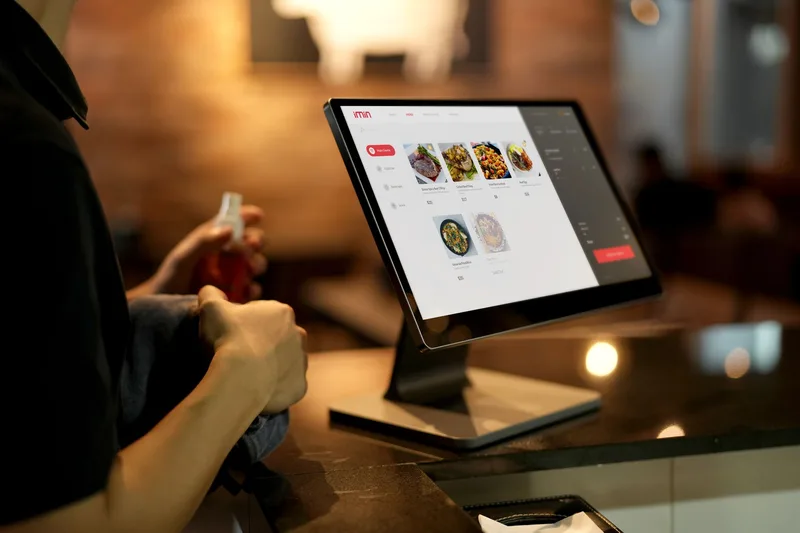
Unified order queue All orders from all channels visible in one place, sorted by SLA urgency. Your team processes orders without logging into each seller center separately. Any manual seller center check creates a gap in the unified view.
SLA monitoring with proactive alerts Each order should carry an automatic countdown based on the specific SLA of that channel. Orders approaching their deadline surface first. Your team should know an order is at risk before it becomes a penalty, not after.
Cross-channel SKU normalization Your team always works from your internal product identifier, not the marketplace-specific one. Cross-platform SKU mapping eliminates picking errors caused by format mismatches between channels.
Documented exception workflows When an order has a problem — payment pending, stock mismatch, failed delivery scan — there should be a defined procedure for what happens next. Systems that surface exceptions without a response path create alert fatigue and slow resolution.
Returns and post-delivery handling Returns are part of order management. An OMS that handles inbound orders but treats returns as a separate workflow leaves half the process unstructured. For marketplace sellers, an unprocessed return not logged in the seller center can create compliance issues.
Connection to your daily ops routine Order management tooling is only as effective as the team habits surrounding it. Your team needs a structured daily routine: what to check first, in what order, what constitutes a completed morning check. For how to build that routine, see Ecommerce Checklist: Daily Operations for Multi-Channel Sellers.
What Metrics Define Healthy Ecommerce Order Management?
The four metrics that define healthy ecommerce order management are: on-time shipment rate (target 95%+ per channel), order accuracy rate (target 99%+), seller-initiated cancellation rate (target below 1%), and returns processing time (target same-day receipt to system update). These are lagging indicators confirming whether your process works. Review them daily — not weekly.

| Metric | Target | What It Diagnoses |
|---|---|---|
| On-time shipment rate | 95%+ per channel | SLA monitoring effectiveness and process adherence |
| Order accuracy rate | 99%+ | Pick-and-pack quality and SKU normalization |
| Seller-initiated cancellation rate | Below 1% | Inventory accuracy and order validation quality |
| Returns from wrong item shipped | Below 2% of returns | Pick accuracy and packaging process quality |
| Order processing time vs. SLA window | Channel-benchmarked | Operational throughput and bottleneck location |
| Late shipment penalty rate | 0% per channel | Exception catching and escalation path effectiveness |
Track these per channel, not as an aggregate. A 6% average late shipment rate that breaks down as 1% on Shopify and 18% on TikTok Shop is a TikTok-specific process problem, not a general ops problem. Aggregate metrics hide the failure point.
Review these metrics every morning, not at the weekly retrospective. A late shipment penalty incurred on Tuesday cannot be prevented on Friday.
How Do High-Performing Ecommerce Teams Manage Orders at Scale?
High-performing ecommerce ops teams treat order management as a structured system, not a collection of daily tasks. The consistent pattern across teams achieving 95%+ on-time rates: a documented 15-minute daily morning order review, defined ownership of each stage in the process flow, a documented exception path for every known failure mode, and a single shared view of all active orders. The metric improvement comes from the system, not from working harder.
The operational pattern that separates high-performing teams is not technical sophistication. It is consistency.
Daily morning order review Every morning starts with a structured review: what shipped overnight, what needs to ship today, what is approaching its SLA window. With the right tooling, this takes 10-15 minutes and prevents the majority of late shipment incidents before they occur.
Clear stage ownership Each stage in the order lifecycle — capture, pick and pack, handoff, returns — has a defined owner. When something goes wrong, there is no ambiguity about who resolves it. Ambiguous ownership is the root cause of most missed SLAs.
Documented exception paths Every known failure mode has a documented response: payment still pending, item not in the expected location, carrier scan not updating, customer dispute filed. When the exception appears, the team follows the documented path, not a judgment call made under pressure.
Channel-specific SLA knowledge Every team member handling fulfillment knows the shipping windows for every active channel from memory, not from checking. This knowledge is documented, trained, and verified. When people leave, the knowledge stays.
Weekly order operations review End of week: review on-time rate, accuracy, and penalty incidents. Identify what broke and why. Update the process before it repeats next week. Automating the routine parts of this review frees team capacity for exception handling rather than status checks.
For how order management integrates into your broader operations system, see Ecommerce Operations: The Complete Management Guide.
Teams managing multi-channel operations across Shopify, Shopee, Lazada, and TikTok Shop can use TaskForce for unified order visibility, SLA monitoring, and the daily checklist structure that keeps fulfillment on track.
Keep Reading
- Ecommerce Order Management Process Flow: 8 Stages Explained
- Marketplace Order Management: Stop Losing Orders Across Channels
- Order Fulfillment Checklist for Multi-Channel Sellers
- Ecommerce Process Automation: What to Automate First
- Marketplace Inventory Management: Stock Sync Across Channels
Frequently Asked Questions
What is order management for ecommerce?
Ecommerce order management is the end-to-end system for receiving, processing, fulfilling, and closing customer orders across all sales channels. It covers the full lifecycle from when a customer places an order to delivery and post-delivery handling including returns. For multi-channel brands, it also normalizes different platform formats and SLA requirements into a single workflow.
What is the difference between an OMS and an ERP for ecommerce?
An order management system (OMS) handles the order lifecycle from capture through delivery and returns. An enterprise resource planning (ERP) system manages broader business operations — finance, HR, procurement — with order management as one module. For ecommerce operations teams, a dedicated OMS provides deeper marketplace integrations and channel-specific SLA handling than most ERP order modules offer.
How do I know if my ecommerce order management process is broken?
Four signals indicate a broken system: your team learns about order problems from customer complaints rather than system alerts; your on-time shipment rate varies significantly across channels; you have received a marketplace penalty in the last 90 days; or no one can answer "what is the status of every open order right now" in under a minute.
When should a growing ecommerce brand invest in an order management system?
The typical trigger is when order volume from any single channel exceeds what one person can monitor reliably, or when you add a second marketplace. If a team member being out sick would create meaningful order management risk, you have likely outgrown manual tracking.
How does order management connect to inventory management?
Every fulfilled order reduces available stock, which must be synchronized across all active channels immediately. Oversells occur when order management and inventory management operate on separate timelines or without real-time sync. Accurate order management depends on accurate inventory — and accurate inventory depends on every order being captured and closed correctly. See Marketplace Inventory Management for how to manage the integration.
Find out what your operation is missing
Answer 10 questions. Get your ops score. Takes 2 minutes.
Take the Scorecard