

How strong are your e-commerce ops? Take the 2-min scorecard.
Score Your OpsMost ecommerce brands manage operations the same way.
Someone checks the seller centers. Someone else checks WhatsApp for the team's updates. A spreadsheet tracks inventory. A shared Google Doc holds the SOPs — the ones that haven't been updated in eight months.
It works until it doesn't. A pricing error on Lazada runs for six hours. A stock sync fails and Shopee shows inventory you don't have. A new team member follows the old SOP and lists a product without the required compliance attributes.
The problem isn't people. It's the absence of an operations system.

What Is Ecommerce Operations?
Ecommerce operations is the system of processes, people, and tools that keeps an online store running across inventory management, order fulfillment, listing compliance, and channel coordination. According to Shopify's 2025 Commerce Trends Report, 73% of merchants cite operational complexity as the primary barrier to profitable scaling.
Ecommerce operations is the infrastructure beneath the sales numbers. Revenue is a lagging indicator. Operations is what determines whether revenue holds.
The term covers everything that happens after a customer discovers your product and before they leave a review. That includes inventory positioning, order processing, listing management, compliance monitoring, fulfillment coordination, and team workflow.
For brands selling on a single channel — a Shopify store, say — operations is manageable. Add Shopee. Add Lazada. Add TikTok Shop. Each platform has its own rules, its own penalty systems, its own compliance requirements. Operations complexity grows faster than headcount.
This is where most multi-channel brands get into trouble: they scale channels before they scale systems.
For a foundational breakdown of what each operational area covers, see our guide to what ecommerce operations means.
Why Do Ecommerce Operations Break as You Scale?
Ecommerce operations typically break at two inflection points: when a brand moves from 1 to 2+ channels, and when the ops team grows past 3-4 people. Both transitions introduce coordination gaps that manual systems — spreadsheets, WhatsApp, shared docs — cannot bridge. A 2024 Gartner survey found that 68% of supply chain leaders cited "poor operational visibility" as their primary scaling bottleneck.
The failure mode is predictable.
A two-person team manages fine on WhatsApp because everyone knows everything. Add a third person. A fourth. Now there are three different versions of "how we list products" in people's heads. Now someone makes a judgment call that costs you a compliance strike on Shopee.
The second failure mode is channel proliferation. Each platform has its own seller center, its own SLA requirements, its own penalty structure. Checking all of them manually, daily, across a team that's also handling customer service and logistics — something always gets missed.
What breaks is not the business. What breaks is the assumption that informal coordination can substitute for operational systems.
What Are the Six Pillars of Ecommerce Operations?
Ecommerce operations organizes into six functional pillars: inventory management, order management, listing and catalog management, marketplace compliance, team workflow and SOPs, and performance monitoring. Weakness in any single pillar creates visible downstream damage — stockouts, delayed orders, listing takedowns, or SLA penalties.
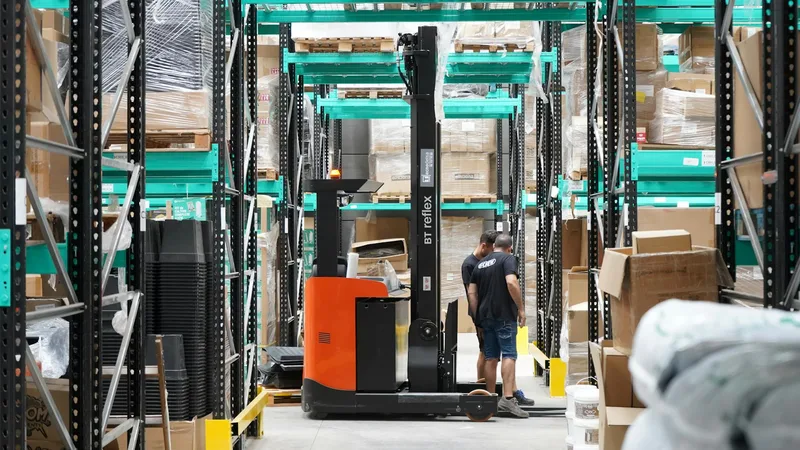
Each pillar has a clear failure signature:
| Pillar | What Breaks When It Fails | Key Metric |
|---|---|---|
| Inventory Management | Oversells, ghost inventory, cash tied up in dead stock | Stock accuracy rate (target: 98%+) |
| Order Management | Missed SLAs, wrong shipments, returns from processing errors | On-time fulfillment rate (target: 95%+) |
| Listing & Catalog | Content drift, wrong prices, missing compliance attributes | Listing compliance rate (target: 100%) |
| Marketplace Compliance | Seller health score drops, penalties, listing suspensions | Seller health score per platform |
| Team Workflow & SOPs | Inconsistent execution, knowledge locked in individuals | Checklist completion rate (target: 95%+) |
| Performance Monitoring | Problems found after they cost money, not before | Time to detect (target: same-day) |
The pillar model matters because it creates diagnostic clarity. When something goes wrong, you can trace it to a specific pillar — and fix the system, not the person.
For a full breakdown of the KPIs that each pillar requires, see ecommerce operations KPIs that actually matter.
How Does Multi-Channel Selling Multiply Operational Risk?
Each additional sales channel multiplies operational risk asymmetrically. A brand on three channels — Shopify, Shopee, and Lazada — does not have 3x the operational surface area; it has roughly 6-9x, because each cross-channel combination introduces synchronization risk. Inventory syncs fail independently. Pricing must be managed per-channel. Compliance rules differ per platform.
This is the math that surprises most brands.
When you add TikTok Shop, you are not just adding another seller center to check. You are adding a new set of compliance rules, a new fulfillment SLA, a new audience requiring different listing formats, and a new point of failure in your inventory sync.

Here is what the operational surface area looks like:
- Inventory sync: Each channel must reflect real-time stock. A sync delay of 30 minutes can create oversells during a campaign flash period.
- Pricing consistency: Promotional pricing on one channel that doesn't match another triggers customer complaints and, on some platforms, algorithmic penalties.
- Listing compliance: Shopee and Lazada have distinct attribute requirements. A product that passes Shopee's listing checks can fail Lazada's entirely.
- Seller health: Each platform tracks its own score. A penalty on TikTok Shop does not affect your Shopee account — but it does affect your revenue, and your operations team needs to catch it the same day.
The brands that manage multi-channel well don't have better people. They have better detection systems.
How Do You Build an Ecommerce Operations System?
An ecommerce operations system has three layers: detection (automated monitoring that catches problems before they escalate), execution (checklists and SOPs that make right behavior the default), and visibility (a daily dashboard that shows how the operation is performing without requiring the founder to check everything manually).
Most brands start with execution — they write SOPs and build checklists. That's the right instinct, but it misses the layer above it.
Detection is more valuable than documentation. A well-documented process for responding to a pricing error is less useful than a system that catches the pricing error the moment it occurs.
The system architecture:
Layer 1 — Detection: Automated checks across all connected channels. Covers listing compliance, stock health, seller health score, pricing anomalies, content drift, and configuration errors. Runs continuously, not on a manual schedule.
Layer 2 — Execution: Evidence-based daily checklists tied to SOPs. Each task links to the relevant procedure. Completion is verified — not with a "done" message, but with photo proof or system confirmation.
Layer 3 — Visibility: A single daily score that combines the health signals from all channels into one number. The Morning Coffee score. You open one view and know whether the operation is clean or has active problems.
Is your operation running on WhatsApp and spreadsheets? See how TaskForce's three-layer ops system compares — start a free trial. No setup fees. No contract.
Building this system from scratch requires integrating with each marketplace's API, building a monitoring layer, and creating a task management system that your whole team uses correctly. Most brands that attempt it spend six months on infrastructure and still end up with partial coverage.
The alternative is a platform built specifically for this problem. TaskForce connects to Shopify, Shopee, Lazada, and TikTok Shop, runs the six audit types automatically, and surfaces the daily operations dashboard without requiring any custom development.
For a step-by-step guide to documenting your operational processes, see how to build an ecommerce operations playbook.
What Metrics Should Ecommerce Operations Teams Track?
Ecommerce operations teams should track metrics across four categories: inventory health (stock accuracy, days of inventory), order health (on-time rate, order accuracy), listing health (compliance rate, content drift score), and team execution (checklist completion rate, time-to-resolution). Most teams track only order-side metrics and miss the upstream indicators.
The distinction between leading and lagging indicators is critical in ecommerce operations.
Revenue is a lagging indicator. By the time you see revenue drop, the operational failure that caused it happened days or weeks earlier. Leading indicators catch the failure before it hits the P&L.
| Metric | Type | Why It Matters |
|---|---|---|
| Stock accuracy rate | Leading | Predicts oversell rate; target 98%+ |
| Listing compliance rate | Leading | Predicts penalty events; target 100% |
| Seller health score (per platform) | Leading | Predicts listing suppression risk |
| Checklist completion rate | Leading | Predicts execution consistency |
| On-time fulfillment rate | Lagging | Reflects order ops performance |
| Return rate by channel | Lagging | Reflects listing accuracy and fulfillment |
| Time to detect issues | Leading | Measures ops responsiveness |
The metric most teams miss is checklist completion rate. It measures whether your team is actually following the processes you built — and it predicts everything downstream. Teams with 95%+ checklist completion have, in our experience across multi-channel ecommerce brands, significantly lower rates of listing compliance violations and missed SLAs.
Stock accuracy deserves particular attention. A 2024 study by Wasp Barcode Technologies found that 34% of businesses have shipped an order late because they unknowingly sold a product that was not in stock. For multi-channel sellers, that failure rate multiplies across every connected platform.
For the full list with benchmark targets and tracking methodology, read 15 ecommerce operations KPIs that actually matter.
What Does a High-Performing Daily Operations Routine Look Like?
High-performing ecommerce operations teams start each day with a 15-20 minute health review across all channels before any reactive work begins. The review covers overnight alerts, stock anomalies, pending order SLAs, and seller health scores. Teams that do this consistently catch 80-90% of operational issues before they escalate, based on TaskForce data from connected multi-channel brands.
The difference between reactive and proactive operations is a morning routine.

The sequence:
Morning health check (15-20 minutes)
- Review overnight alerts: pricing anomalies, stock level changes, seller health signals
- Check order queue: anything at SLA risk from overnight
- Assign daily checklists to team members with context from the health check
Midday verification (10 minutes)
- Confirm checklist completion progress
- Review any escalations from the morning assignments
- Catch any afternoon campaign or promotion prep issues
End-of-day close (10 minutes)
- Confirm all orders dispatched and logged
- Review the day's compliance check results
- Flag anything that needs attention before the next morning
The full routine with task-level detail is in our ecommerce daily operations checklist.
What Are the Most Common Ecommerce Operations Mistakes?
The four most common ecommerce operations mistakes are: managing operations through communication tools instead of systems, tracking only lagging metrics, writing SOPs that no one follows, and treating compliance as a one-time setup task rather than a continuous monitoring requirement.
1. Confusing communication with coordination. WhatsApp is a messaging tool. It is not an operations system. "Done" in a WhatsApp message is not the same as verified task completion. When your ops run through a messaging thread, you have no audit trail, no systematic verification, and no visibility into whether the team is executing correctly.
2. Tracking revenue instead of operational health. Most brands monitor GMV, conversion rate, and ROAS. Few monitor listing compliance rate or seller health score. The operational metrics predict the business metrics. Ignore them, and revenue problems arrive as surprises.
3. Writing SOPs and not using them. An SOP that lives in a Google Doc that nobody opens is not an operations system. SOPs only work when they're linked to the tasks that trigger them and enforced at the point of execution — not stored in a folder.
4. One-time compliance setup. Marketplaces update their listing requirements constantly. What passed Shopee's compliance check in Q1 may fail in Q3 after an attribute update. Compliance is a continuous monitoring requirement, not a one-time onboarding task.
For a structured approach to avoiding these failure modes, see our guide on building an ecommerce operations team structure.
Frequently Asked Questions
What is ecommerce operations management?
Ecommerce operations management is the function responsible for keeping all the operational systems of an online business running — inventory, orders, listings, compliance, team workflow, and performance monitoring. It involves setting up repeatable processes, monitoring for issues across all channels, and ensuring the team executes consistently. For multi-channel brands, this typically requires dedicated tooling because manual coordination across platforms doesn't scale.
How many people do you need for an ecommerce operations team?
Most ecommerce brands can run effective operations with 2-4 dedicated operations staff if they have the right systems in place. The ratio that works is roughly one operations coordinator per 2-3 active channels, plus a team lead or operations manager overseeing the full function. Brands that run operations without dedicated tooling typically need 20-30% more headcount to cover the manual checking work a system would automate.
What tools do ecommerce operations teams use?
Ecommerce operations teams typically use a combination of: marketplace seller centers for direct platform access, inventory management software for stock sync, an order management system for fulfillment routing, and an operations platform for daily monitoring, checklists, and compliance tracking. The gap most teams have is the operations monitoring layer — a system that proactively detects issues across all channels rather than waiting for problems to surface in seller center dashboards.
How do you measure ecommerce operational efficiency?
Operational efficiency in ecommerce is measured through a combination of leading indicators (stock accuracy rate, listing compliance rate, checklist completion rate, time-to-detect issues) and lagging indicators (on-time fulfillment rate, return rate, SLA penalty frequency). High-performing teams target 98%+ stock accuracy, 95%+ on-time fulfillment, and 100% listing compliance rate as baseline operational health markers.
What is the difference between ecommerce operations and supply chain management?
Supply chain management covers the upstream procurement, manufacturing, and logistics network — from raw materials to the brand's warehouse. Ecommerce operations covers the downstream execution layer — from the warehouse through the marketplace channels to the customer. The two functions overlap at inventory positioning and fulfillment logistics, but ecommerce operations has a distinct focus on marketplace compliance, listing management, and channel coordination that falls outside traditional supply chain scope.
Keep Reading
Find out what your operation is missing
Answer 10 questions. Get your ops score. Takes 2 minutes.
Take the Scorecard