

How strong are your e-commerce ops? Take the 2-min scorecard.
Score Your OpsOne order. Five systems it has to pass through cleanly.
Miss a step on any one of them and the fallout shows up somewhere else: a late shipment penalty, a customer dispute, a stockout that was not really a stockout. Ecommerce order management is the discipline of keeping that path clean across every channel you sell on.
This guide covers what ecommerce order management actually means, the stages every order moves through, the types of systems available, what they cost, and how to choose one when you are running Shopify alongside Shopee, Lazada, and TikTok Shop.

What Is Ecommerce Order Management?
Ecommerce order management is the process and system for capturing, processing, fulfilling, and closing customer orders across every sales channel a business uses. It covers the full order lifecycle from checkout to delivery confirmation, including returns and cancellations. According to Shopify's order management system guide, merchants selling on three or more channels need centralized order visibility to avoid the fulfillment errors that come from working out of separate seller center dashboards.
For a single-channel store, order management barely needs a name. Orders come in through one dashboard, you fulfill them, you ship. The whole process fits in one person's head.
Add a second marketplace and the picture changes. Add Shopee, Lazada, and TikTok Shop on top of Shopify and you now have four order sources, four SLA clocks, four penalty systems, and one team trying to hold all of it together without losing an order in the gap between dashboards.
That gap is exactly what order management for ecommerce exists to close. This page covers the broader system and buying decision. For the full step-by-step breakdown of what happens between order capture and delivery, see the dedicated process guide.
What Are the Stages of the Ecommerce Order Management Process?
The ecommerce order management process runs through five stages: order capture, verification and payment confirmation, fulfillment routing, shipping and tracking, and post-delivery handling for returns or disputes. Multi-channel sellers run this same sequence separately for every connected marketplace, which is where manual processes break down first.
Each stage carries its own failure points:
- Order capture: the order lands in your system the moment a customer checks out, whether that is your Shopify storefront or a Shopee, Lazada, or TikTok Shop seller center.
- Verification: payment confirms, fraud checks clear, and stock is reserved against the order before it moves forward.
- Fulfillment routing: the order gets assigned to a warehouse or fulfillment location and enters the pick-pack-ship workflow.
- Shipping and tracking: a carrier label generates, the package ships, and tracking updates flow back to the customer and the originating channel.
- Post-delivery: delivery confirms, and any return, exchange, or dispute gets processed against the original order record.
On a single channel, these stages run in a straight line. Across four channels, they run in parallel, each with different SLA windows and different rules for what counts as "late." For the full mechanics of each stage, including where multi-channel teams lose time, see the complete process flow.
What Are the Main Types of Ecommerce Order Management Systems?

Ecommerce order management systems fall into three tiers: manual spreadsheet processes, dedicated order management software (OMS), and full ecommerce ops platforms. Spreadsheets work for single-channel sellers under roughly 20 orders a day. Dedicated OMS tools centralize orders and routing. Ops platforms add order management alongside inventory health, team checklists, and SOP-linked exception handling.
| Type | What It Handles | Best For |
|---|---|---|
| Manual / spreadsheet | Order tracking by hand, manual channel checks | Single-channel sellers, under 20 orders/day |
| Dedicated OMS | Centralized order capture, routing, shipping labels | Growing sellers on 2 to 4 channels |
| Ecommerce ops platform | Order management + inventory health + team checklists + SOP library | Multi-channel teams running 3+ marketplaces |
Most sellers start on spreadsheets and outgrow them fast. The jump from a spreadsheet to a dedicated OMS usually happens the first time an order gets missed during a sale event. The jump from OMS to a full ops platform happens when the bottleneck shifts from "where is this order" to "why does this keep happening and who is accountable for fixing it."
What Order Management Problems Do Multi-Channel Sellers Face?
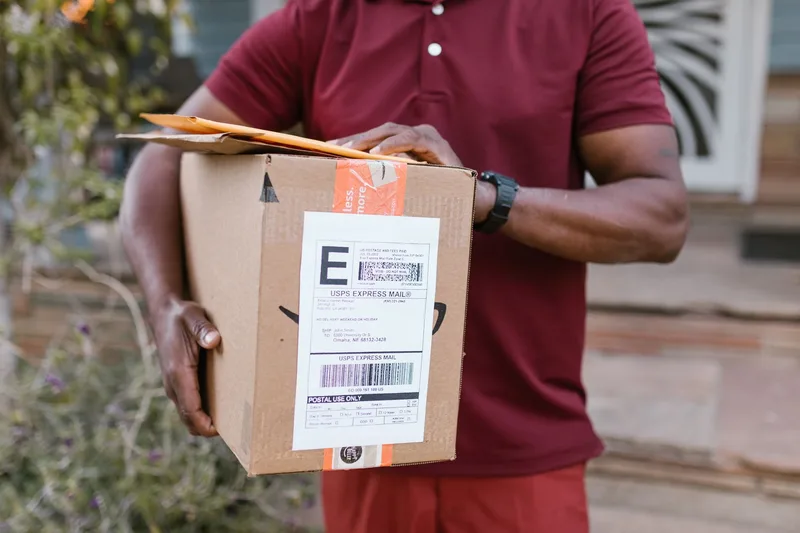
Multi-channel sellers most commonly struggle with order visibility gaps, missed SLA windows, and inconsistent return handling across marketplaces. According to Shopify's 2025 Commerce Trends Report, merchants with fragmented order management processes experience 3.6x more fulfillment errors than those operating a single unified workflow.
The problems tend to cluster into three patterns:
Visibility gaps. An order ships on Shopee, but your team is checking a different dashboard when the exception fires. By the time anyone notices, the SLA window has closed and a penalty point posts to the seller account.
SLA conflicts. Shopee, Lazada, and TikTok Shop each define "late shipment" differently, with different grace periods and different penalty structures. A workflow tuned for one channel's rules can quietly violate another's. This is a core part of marketplace order management that generic OMS tools were not built to handle.
Inconsistent returns. Without a shared process, returns get handled channel by channel, ad hoc, by whoever picks up the ticket. That inconsistency is what erodes seller health scores over time, separate from any single mistake.
Teams we work with managing three or more channels typically lose several hours a week just reconciling order status across seller centers. That time disappears once order data lives in one place instead of four. Centralizing that view is also what makes multi-channel order management sustainable as order volume grows past a few hundred orders a day.
How exposed is your order process to a bad campaign day? Score your ops in 2 minutes and see where the gaps are. Take the free scorecard. No signup required.
What Features Should You Look for in an Order Management System?
The features that matter most for multi-channel order management are real-time order sync across channels, SLA-aware routing, unified return handling, role-based accountability, and alerts linked to a defined response process. Systems that surface an exception without a next step create alert fatigue instead of solving the problem.
In order of impact for multi-channel teams:
- Real-time order sync: new orders should appear centrally within seconds of checkout, on every connected channel, not on a batch delay.
- SLA-aware routing: the system should know each channel's shipping deadline and flag orders approaching that window, not just a generic "processing" status.
- Unified return handling: one workflow for processing a return regardless of which marketplace it originated on, so the process does not depend on which team member handles which channel.
- Role-based accountability: a log of who touched an order, when, and what changed, so a missed SLA has a clear root cause instead of a shrug.
- SOP-linked alerts: an exception should point to the documented procedure for resolving it. Pairing alerts with an ecommerce checklist closes that loop instead of leaving it to memory.
How Much Does Ecommerce Order Management Software Cost?
Order management software typically costs $50 to $300 a month for small and mid-size multi-channel sellers, scaling to $1,000 or more for enterprise platforms with high order volume. Most vendors price by order volume, channel connections, or seat count, and campaign-period order spikes are the most common source of unplanned overage charges.
| Tier | Typical Monthly Range | Priced By |
|---|---|---|
| Dedicated OMS, entry tier | $50 to $150 | Order volume |
| Dedicated OMS, growth tier | $150 to $300 | Order volume or channel count |
| Ecommerce ops platform | Varies by team size | Seats or channels |
Order-volume pricing is predictable at steady state and expensive during a campaign spike, when order counts commonly run 3x to 5x above baseline for events like 11.11 or year-end sales. Factor that multiplier into any pricing comparison, not just the baseline monthly rate.
How Do You Choose the Right Order Management System for Multi-Channel Selling?

Choose an order management system by mapping your current failure mode first: missed SLAs, lost visibility, or inconsistent returns. Match the system tier to that failure mode rather than the longest feature list, and weight SLA-aware routing and unified returns handling above raw order tracking once you are selling on three or more channels.
A practical evaluation process:
- Identify what is actually breaking. Late shipments, lost orders, or return chaos each point to a different fix. Do not buy a full ops platform to solve a problem a dedicated OMS already handles.
- Count your channels and order volume. A two-channel seller at 50 orders a day has different needs than a four-channel seller at 500. Match system complexity to actual complexity.
- Test with real orders during a trial. Every vendor claims clean integrations with Shopify, Shopee, Lazada, and TikTok Shop. Run your highest-volume SKUs and a return through the trial before committing.
- Check how exceptions are handled, not just how orders are tracked. The system that matters is the one that tells your team what to do when something goes wrong, not just where the order currently sits.
- Confirm the system scales with your ecommerce workflow, not against it. A tool that adds a step your team has to work around will get abandoned within a quarter.
The right system for multi-channel order management is the one that removes your current failure mode, not the one with the most dashboards.
Frequently Asked Questions
What is ecommerce order management?
Ecommerce order management is the process of capturing, processing, fulfilling, and closing customer orders across every sales channel a business uses. It spans checkout to delivery confirmation, including returns and cancellations. Multi-channel sellers running three or more marketplaces need centralized visibility to avoid the fulfillment errors that come from checking separate dashboards.
What is the best order management system for multi-channel sellers?
The best fit depends on your channel count and order volume. Sellers on two to four channels typically need a dedicated OMS with real-time sync and SLA-aware routing. Teams running three or more marketplaces benefit most from an ops platform that pairs order management with inventory health monitoring and team accountability tools.
How much does an ecommerce order management system cost?
Order management software typically runs $50 to $300 a month for small and mid-size multi-channel sellers, with enterprise platforms running $1,000 or more. Most vendors price by order volume, channel connections, or seat count. Campaign-period order spikes, often 3x to 5x baseline, are the most common source of unplanned overage costs.
What is the difference between order management and inventory management?
Order management tracks the lifecycle of a customer order from checkout to delivery. Inventory management tracks stock levels and availability. The two connect closely: an order cannot fulfill correctly if the inventory data behind it is wrong, which is why ops platforms increasingly combine both functions in one view.
Keep Reading
Find out what your operation is missing
Answer 10 questions. Get your ops score. Takes 2 minutes.
Take the Scorecard